
engraving
Gustave Doré, The Conversion of Saul (engraving)
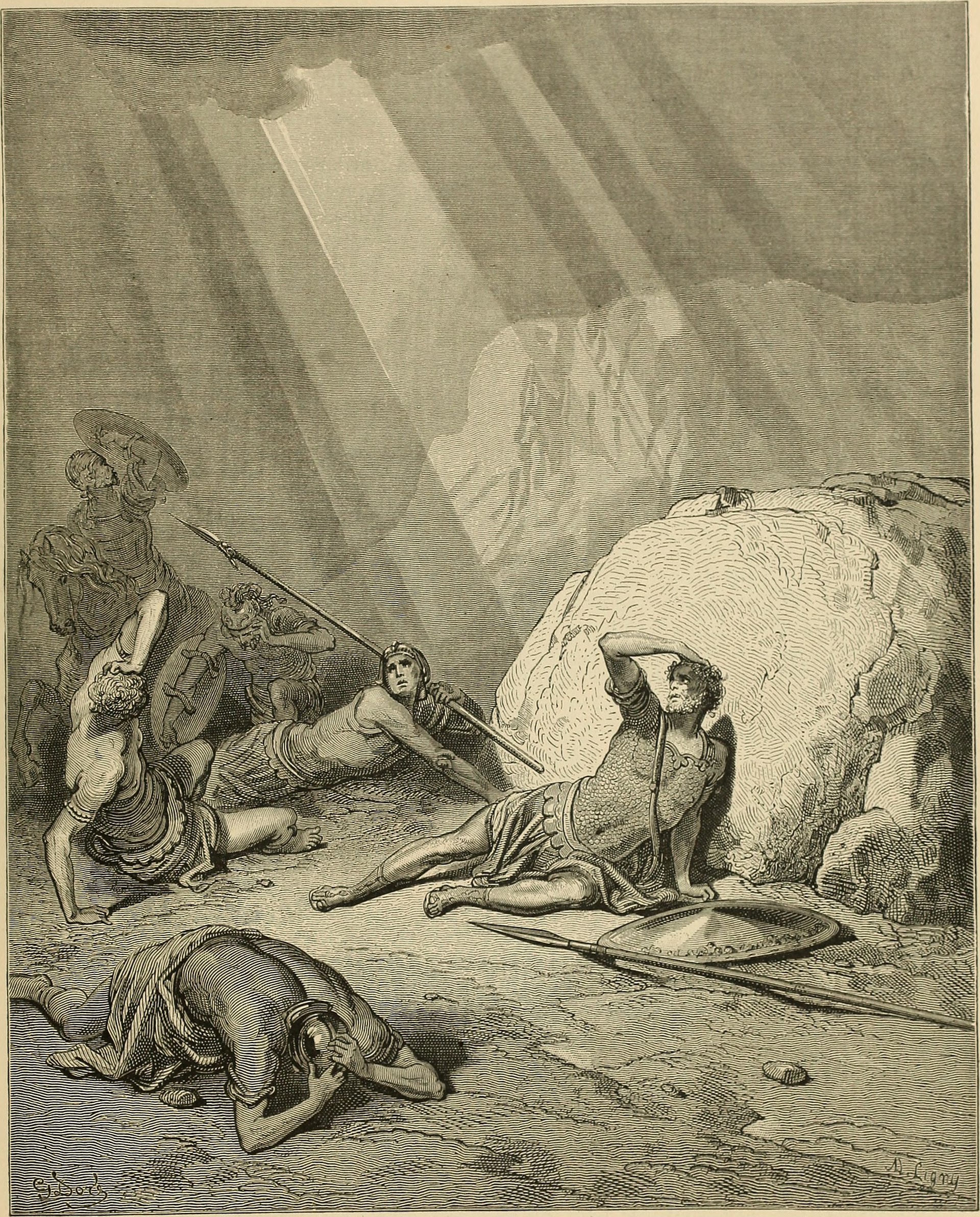
This dramatic wood-engraving, *The Conversion of Saul*, is after a design by the French illustrator Gustave Doré (1832-1883), whose illustrated Bible of 1866 became one of the most widely reproduced sets of scriptural images ever made. The scan here comes from a later volume, *The Bible Panorama* (1891), and carries the status "no known copyright restrictions." (Scholarship)
The subject: struck down on the road to Damascus
The engraving depicts the turning point in the life of the Apostle Paul, then still called Saul and travelling to Damascus to arrest followers of Jesus. As narrated in the Acts of the Apostles: "as he went on his journey, it came to pass that he drew nigh to Damascus. And suddenly a light from heaven shined round about him. And falling on the ground, he heard a voice saying to him: Saul, Saul, why persecutest thou me?" (Acts 9:3-4, Douay-Rheims). (Scripture) Doré shows Saul thrown from among his companions, the heavenly light breaking over the scene. It is the moment the persecutor becomes the apostle — an event Acts narrates three times (Acts 9; 22; 26) and which Paul himself describes as a divine call (Galatians 1:15-16). (Scripture)
History of the image
Doré's Bible illustrations were engraved by a team of skilled block-cutters working from his designs and issued in 1866; they were reprinted across Europe and North America for decades. This particular printing belongs to *The Bible Panorama, or The Holy Scriptures in Picture and Story* (1891). (Scholarship) Both the original design and this printing are in the public domain.
Relevance to Paul
The conversion is the hinge of Paul's whole biography, and Doré's engraving is among the most recognisable images of it. It marks the beginning of the mission that would carry the man from Tarsus across the Roman world — the memory that St Paul Global Week marks. On 28-30 June 2027, around the 29 June Solemnity of Saints Peter and Paul, a faith-tourism gathering organised by Funny Tourism will bring pilgrims to Tarsus and Mersin. See the programme and read why Tarsus.
Provenance
A wood-engraving after a design by Gustave Doré (1832-1883), first published in his illustrated Bible of 1866. The scan reproduced here is from The Bible Panorama, or The Holy Scriptures in Picture and Story (1891), digitised from a Library of Congress copy and distributed via Flickr Commons with the statement 'no known copyright restrictions.' The design is public domain by age.
Credit and source
- Source:
- Reproduced in The Bible Panorama (1891); Library of Congress / Flickr Commons feed (via Wikimedia Commons)
- Licence:
- Public Domain — no known copyright restrictions
- Original:
- View the source
Frequently asked questions
What does Doré's Conversion of Saul show?
It shows Saul, the future Apostle Paul, struck down by a light from heaven on the road to Damascus, the event narrated in Acts 9. Doré depicts him thrown from among his companions as the heavenly light breaks over the scene.
When was the engraving made?
The design is by Gustave Doré and was first published in his illustrated Bible of 1866. The particular scan reproduced here is from a later volume, The Bible Panorama, printed in 1891.
Is the image free to use?
Yes. Both Doré's original design and this 1891 printing are in the public domain by age, and the digitised copy is distributed with the statement 'no known copyright restrictions.'
St Paul Global Week · 28–30 June 2027
Experience it in person
Gather in the birthplace of the Apostle Paul. An international gathering in Tarsus and Mersin, held around the Solemnity of Saints Peter and Paul, with the Feast Day prayer programme broadcast live worldwide.
Travel and pilgrimage are arranged by Funny Tourism.